
Review
San Diego
Hume Body Pod Review: Worth the $229 Price Tag? (vs. $80 Smart Scales & $25k Medical Analyzers)
Accurate body composition measurement has long been restricted to clinical environments. For decades, the standard protocol for measuring human body fat, muscle mass, and bone density involved scheduling a $150 DEXA scan or stepping into a Bod Pod displacement chamber. On the opposite end of the spectrum, consumer electronics companies flooded the market with single-frequency smart scales. These basic devices estimate body fat using algorithms that are notoriously sensitive to minor changes in hydration, yielding erratic and often useless data.
The gap between clinical-grade accuracy and consumer convenience is substantial. Recently, the Hume Health Body Pod entered this specific market gap. Priced at $229, it positions itself as an advanced at-home alternative to both cheap consumer scales and expensive medical analyzers. My analysis evaluates whether the underlying technology justifies the cost, examining the device's measurement methodology, data utility, and practical application.
Before proceeding with the detailed breakdown of the device's technical specifications and comparative value, you can check the current availability and pricing of the Hume Body Pod here.
What is the Hume Body Pod and How Does It Work?
To evaluate the Hume Body Pod, we must first understand the mechanism it uses to collect data. The device relies on Bioelectrical Impedance Analysis (BIA). BIA works by sending a safe, low-level electrical current through the body. Because different tissues (muscle, fat, bone, water) conduct electricity at different rates, the device measures the resistance (impedance) to this current to calculate body composition.
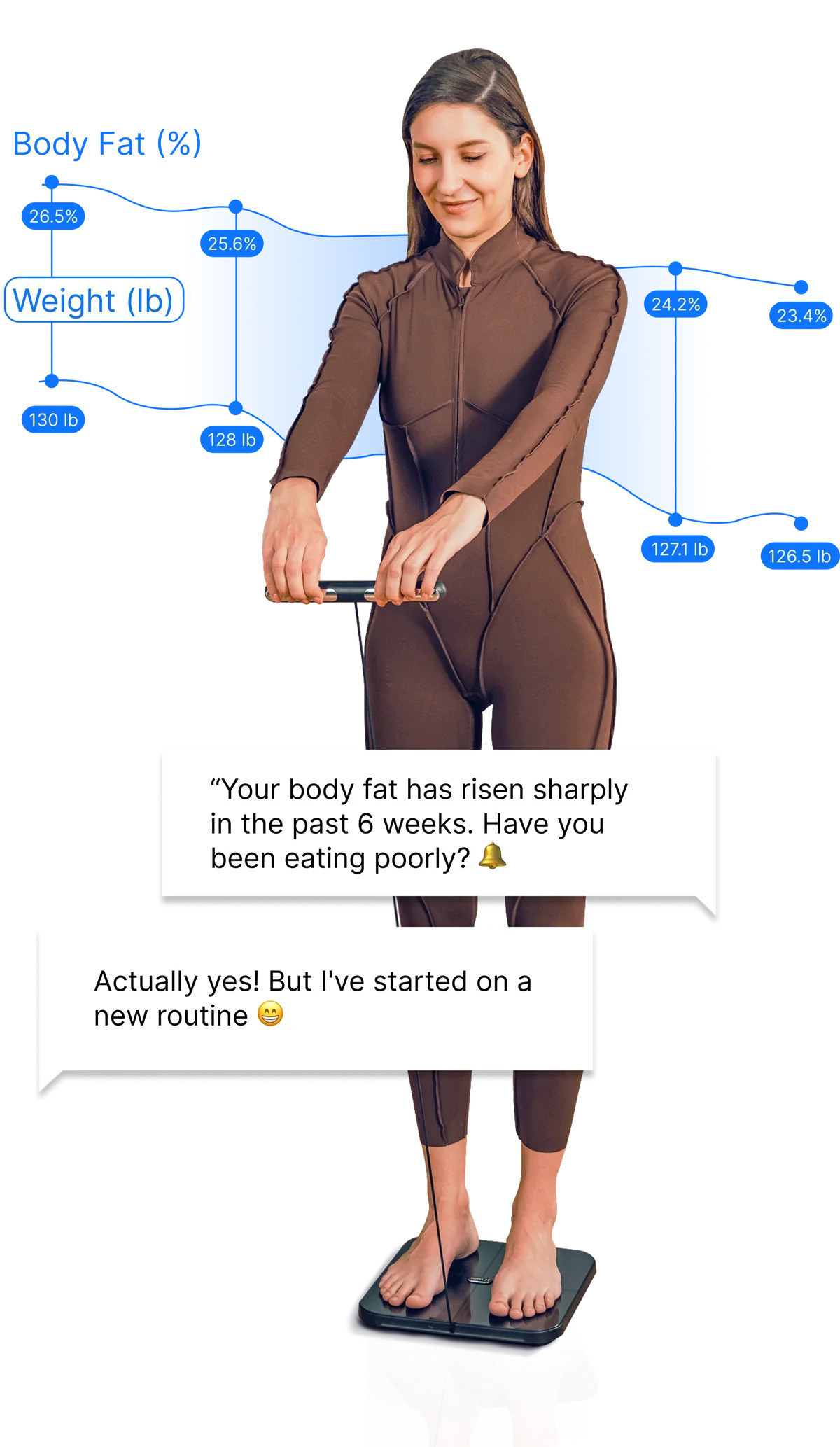
Most budget smart scales use a single-frequency current that only travels up one leg and down the other. The Hume Health Body Pod utilizes an 8-frequency sensor system combined with a segmental handle. When you step onto the base platform and grip the handle, the device creates a closed circuit that passes through your entire body. This dual-point contact technology measures your arms, legs, and torso independently, providing a full-body segmental scan in under 60 seconds.
The resulting data set is extensive. The Hume Health Body Pod tracks 45 distinct metrics. The core outputs include:
- Body Fat Percentage: The total mass of fat divided by total body mass.
- Skeletal Muscle Mass: A foundational indicator of metabolic rate and physical strength.
- Visceral Fat: The fat stored within the abdominal cavity around vital organs, which serves as a critical marker for metabolic health.
- Total Body Water: Metrics differentiating intracellular and extracellular water to determine true hydration status.
- Bone Mass: Measurements tracking bone density trends.
All this data syncs via Bluetooth to the free Hume Health app. The app serves as the central hub for data visualization, organizing complex BIA outputs into readable trend graphs.
Who Should Consider the Hume Health Body Pod?
Based on the feature set and data output, this device solves specific problems for particular demographics.
Individuals actively pursuing body recomposition will find the segmental data highly relevant. Losing weight often results in a concurrent loss of skeletal muscle mass. The Hume Body Pod isolates fat mass from muscle mass, allowing users to verify that a caloric deficit is reducing adipose tissue rather than breaking down muscle.
Fitness enthusiasts tracking symmetrical development also benefit from this hardware. Because the handle sensors measure the right and left sides of the body independently, the device flags muscle imbalances. This data allows users to adjust their training protocols to correct unilateral deficits before they lead to structural compensation or injury.
Finally, health-conscious users focused on longevity and metabolic markers are an ideal fit. Tracking visceral fat and metabolic age provides quantifiable data points for interventions aimed at long-term wellness. If you fall into one of these categories and require precise tracking, you can learn more about the Hume Body Pod's features here.
Who Should Pass on This Device?
Objective analysis requires acknowledging that not every tool is suited for every user. The $229 investment is unnecessary if your primary goal is simply monitoring total body weight. A basic $20 digital scale performs that specific function flawlessly.
Furthermore, users who require absolute diagnostic certainty for critical medical conditions should consult a physician and utilize clinical imaging. While the Hume Health Body Pod demonstrates high relative accuracy for an at-home device, it remains a tracking tool rather than a diagnostic medical instrument.
Lastly, individuals who experience anxiety or distress from high-frequency health data monitoring might find the 45 metrics overwhelming. The device requires engagement with the companion app to interpret the data effectively. If you prefer a low-technology approach to health management, this system will likely cause unnecessary friction.
Market Comparison: Hume Body Pod vs. The Alternatives
Evaluating the device requires benchmarking it against the two dominant alternatives in the body composition space.
Vs. $80 Smart Scales
Budget smart scales rely heavily on predictive algorithms based on age, gender, and height rather than true physical measurement. Because a base-only scale cannot send a current through the upper body, it essentially guesses your torso and arm composition based on your leg data. This results in high error rates. A heavy meal or a glass of water can shift your reported body fat percentage by three points overnight on a budget scale.
The Hume Health Body Pod's 8-frequency sensors and hand grips eliminate the need for upper-body estimation. By measuring the full circuit, it reduces the margin of error significantly. The price difference directly reflects the cost of integrating these additional sensors and the complex processing chip required to handle multi-frequency BIA.
Vs. $25k Clinical Analyzers
The gold standard for body composition remains Dual-Energy X-ray Absorptiometry (DEXA). Clinical-grade BIA machines like the InBody 770 also provide exceptional accuracy. These machines cost tens of thousands of dollars, and individual scans typically run between $75 and $150 per session.
According to independent third-party testing conducted by Socotech, the Hume Body Pod's accuracy aligns within ±3% of a DEXA scan. This represents a 98% DEXA-level accuracy rate. For clinical research, that 2% variance matters. For a consumer tracking weekly progress at home, that variance is statistically insignificant. The Hume device allows for daily or weekly measurements at a fraction of the long-term cost of clinical visits, providing a denser, more actionable trendline over time. To access this level of continuous tracking, order your Hume Body Pod through the official portal.
The User Experience: Setting Up and Daily Tracking
Applying the device to a daily routine reveals a streamlined user experience designed to minimize data collection friction. The initial setup requires unboxing the unit, placing it on a hard, uncarpeted surface, and pairing it via Bluetooth to a smartphone.
The measurement protocol is straightforward. The user steps onto the base barefoot, pulls the handle up to waist height, and holds the integrated electrodes. The display guides the process, which takes approximately one minute to complete. The internal medical-grade measurement chip processes the frequencies, and the data populates the Hume Health app instantly.
The application architecture organizes the 45 metrics logically. Instead of presenting a raw data dump, it categorizes information into core totals (like total body water and BMI), segmental fat percentages, and segmental muscle balances. The app filters out daily noise by presenting trend graphs, effectively demonstrating how interventions in diet or training impact body composition over weeks and months. Users have reported noticeable, verifiable physical changes tracked by the scale that did not register on standard weight scales, reinforcing the value of composition tracking over gross mass tracking.
Pros and Cons of the Hume Body Pod
A rigorous evaluation reveals clear advantages and distinct limitations.
Pros:
- High-Fidelity Accuracy: Independent validation confirming alignment within 3% of DEXA scans provides confidence in the data output.
- Comprehensive Segmentation: The ability to measure arms, legs, and torso independently provides actionable data for correcting physical imbalances.
- Actionable Health Insights: Tracking specific markers like visceral fat and intracellular water provides a clearer picture of cellular and metabolic health.
- App Integration: The free companion app effectively visualizes long-term trends, keeping users accountable and informed without requiring a paid subscription for basic functions.
- Financial Flexibility: The device qualifies as HSA/FSA eligible, allowing users to purchase it with pre-tax health funds.
Cons:
- Initial Cost: At $229, the upfront capital requirement is significantly higher than standard bathroom scales.
- Strict Measurement Protocols Required: To maintain high accuracy, users must weigh in consistently under similar physiological conditions (e.g., mornings, prior to eating or training) to avoid hydration-based skewing.
- Data Density: The sheer volume of 45 metrics requires a learning curve for the user to understand what each data point signifies.
Final Verdict: Is It Worth the Investment?
The evidence suggests that the Hume Health Body Pod successfully bridges the gap between unreliable consumer scales and inaccessible clinical equipment. The integration of 8-frequency BIA technology and segmental handle sensors validates the $229 price point by delivering data previously unavailable outside of a medical facility.
For individuals actively managing body recomposition, tracking metabolic health markers, or seeking to optimize physical symmetry, the device provides a high return on investment. It transforms ambiguous goals into measurable, trackable data points. By isolating muscle mass from fat mass and measuring visceral fat, it provides the feedback necessary to determine if dietary and exercise protocols are actually working.
If your health and fitness objectives require precise, reliable data to guide your decision-making, the hardware justifies the cost. You can secure your Hume Health Body Pod and begin tracking your true physical metrics today.